0 %

This project focuses on the development of a comprehensive customer management solution designed to centralize all relevant information within a single platform. Its main goal is to provide businesses with a global and organized view of each customer, allowing quick access to personal data, bookings, communications, payments, and outstanding balances.

Company

Time management technologies, sl.

Industry

Sports

Date

2020
Responsibilities:
Design system
User Interview
Data Analysis
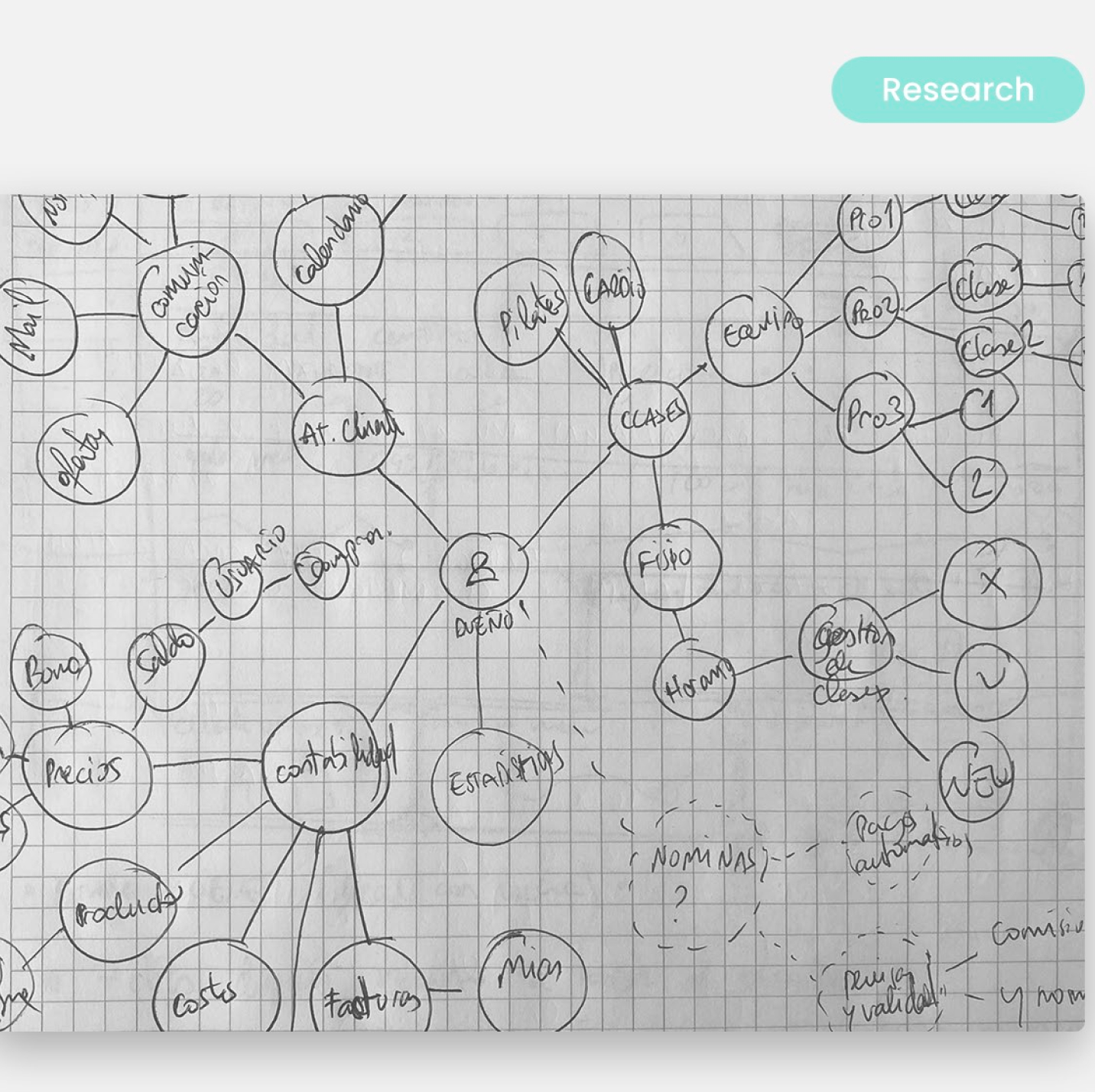
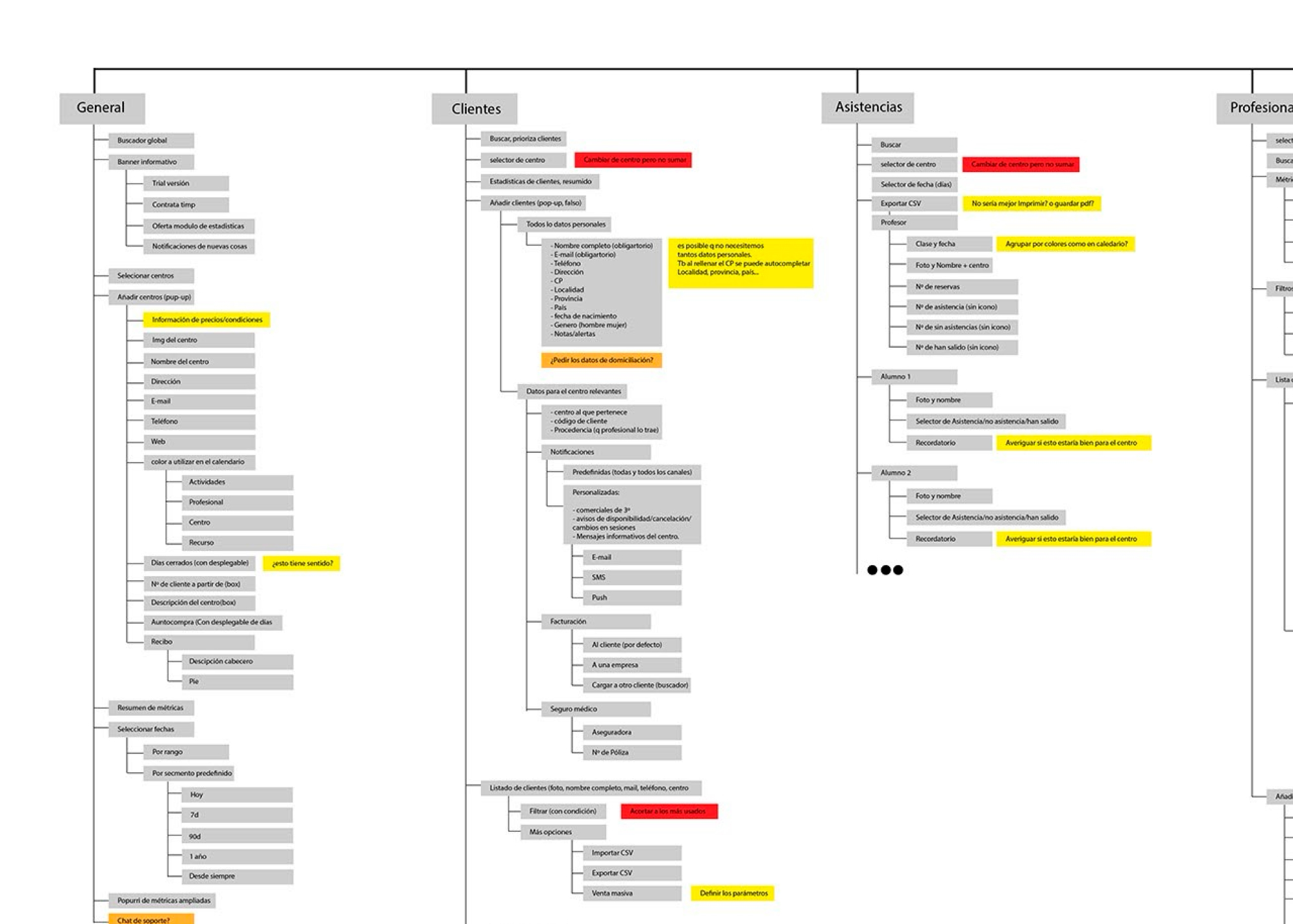
Information Architecture
UX Strategy
UI Design
User Flows

Context + Challenge

Designing a time-tracking and productivity experience

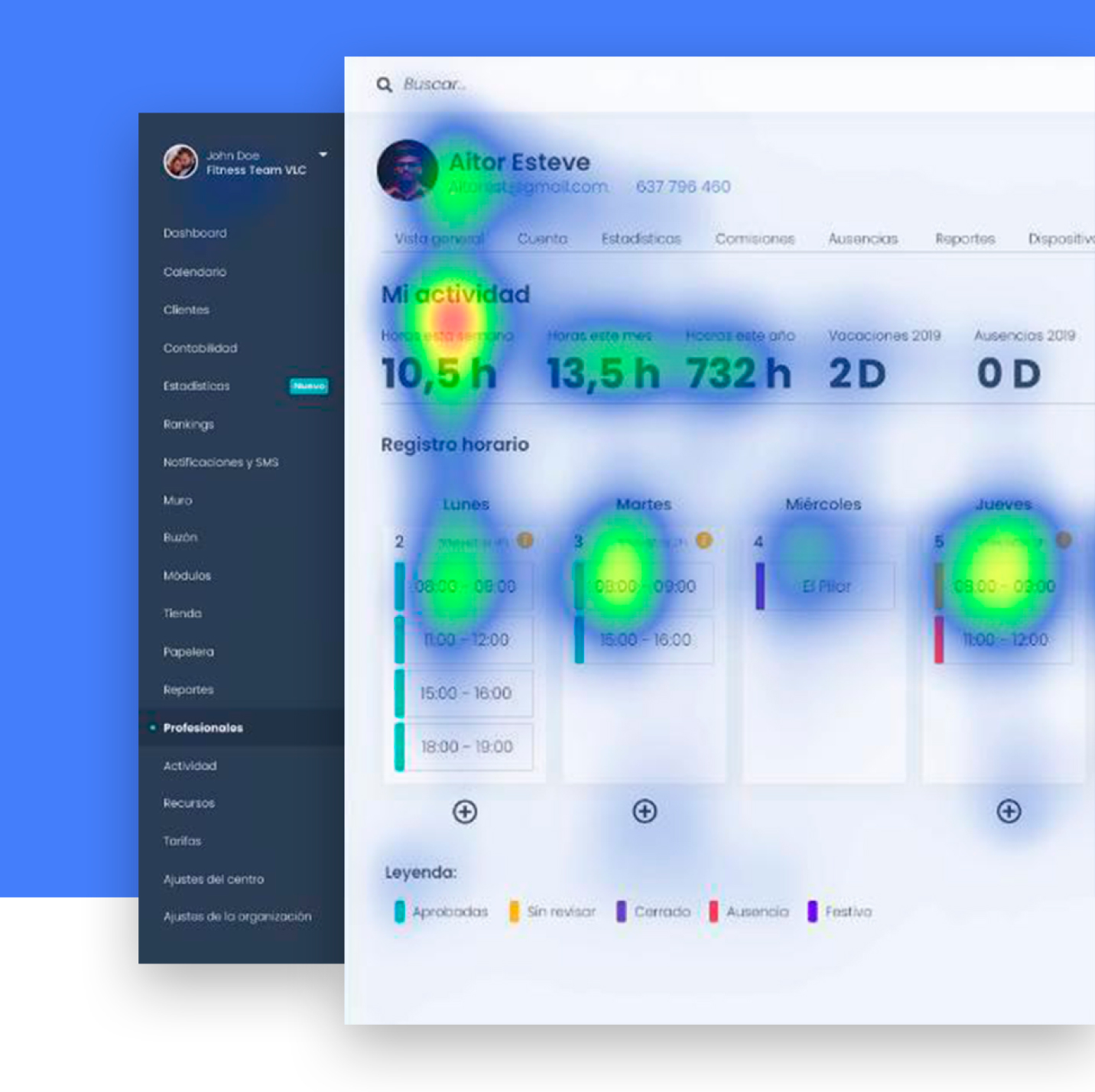
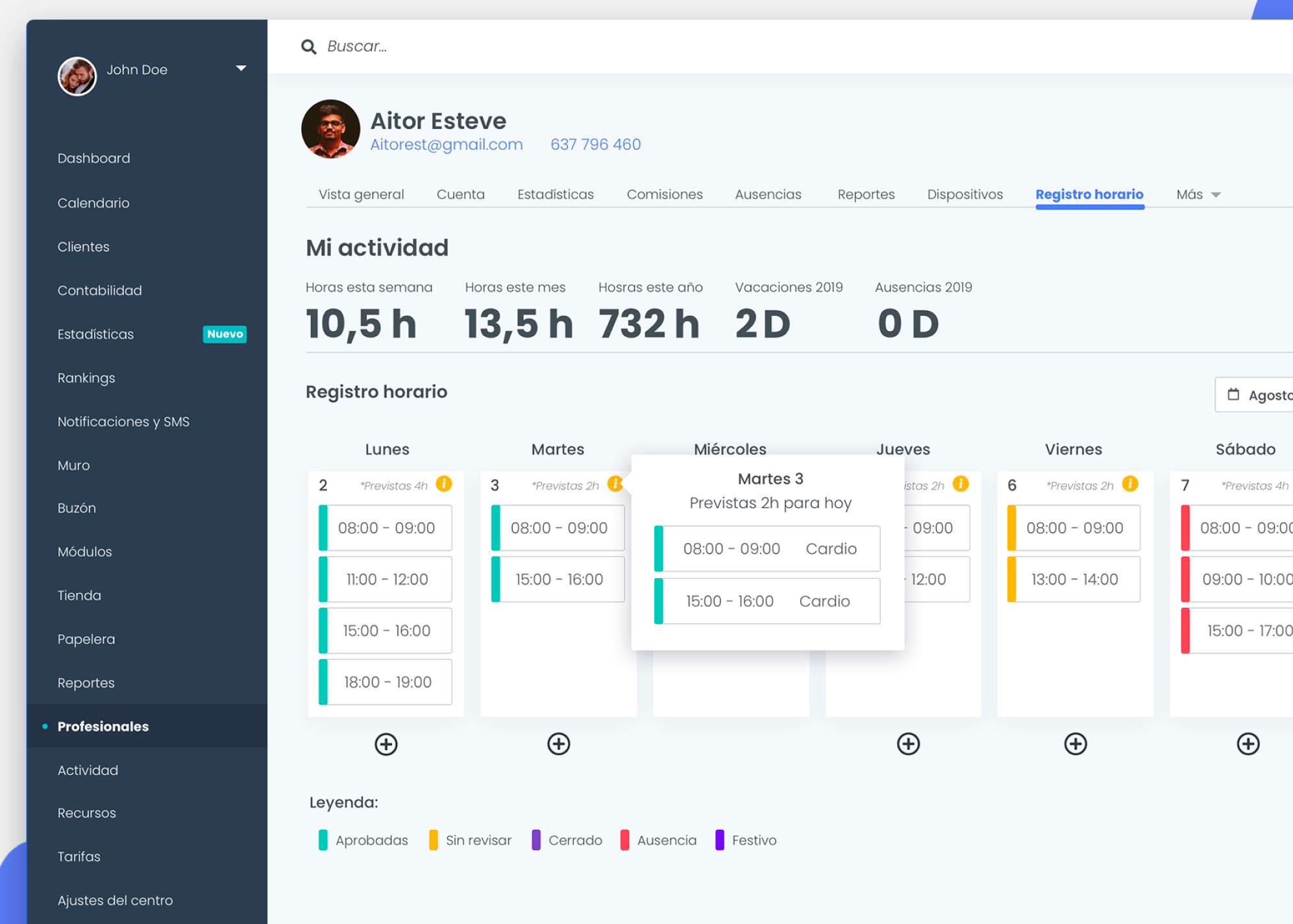
Timp is a time tracking and productivity-focused digital product designed to help users better understand, manage, and optimize how they spend their working time.

The main challenge of the project was creating an experience that could handle precise time tracking, task organization, and productivity insights while remaining simple, fast, and frictionless to use on a daily basis.

During the discovery phase, several key problems were identified:

  • time tracking tools often feel complex or unintuitive,
  • users struggle to maintain consistent tracking habits,
  • and productivity data is usually hard to interpret or not actionable.

The goal was to design a product that felt:

Simple, efficient, and habit-forming, while reducing friction in core daily actions like starting, stopping, and reviewing time entries.

Process + UX Decisions

Designing a time-tracking and productivity experience

The design strategy focused on reducing friction in the most frequent user actions and making time tracking feel natural and effortless rather than administrative.

To achieve this, the core workflows were simplified into fast, minimal interaction patterns, allowing users to start and stop tracking with minimal cognitive effort.

Special attention was given to clarity of time data, ensuring that users could quickly understand what they worked on, for how long, and how their time was distributed across tasks.

The interface was designed with a strong emphasis on hierarchy and simplicity, prioritizing essential actions while reducing unnecessary complexity in secondary features.

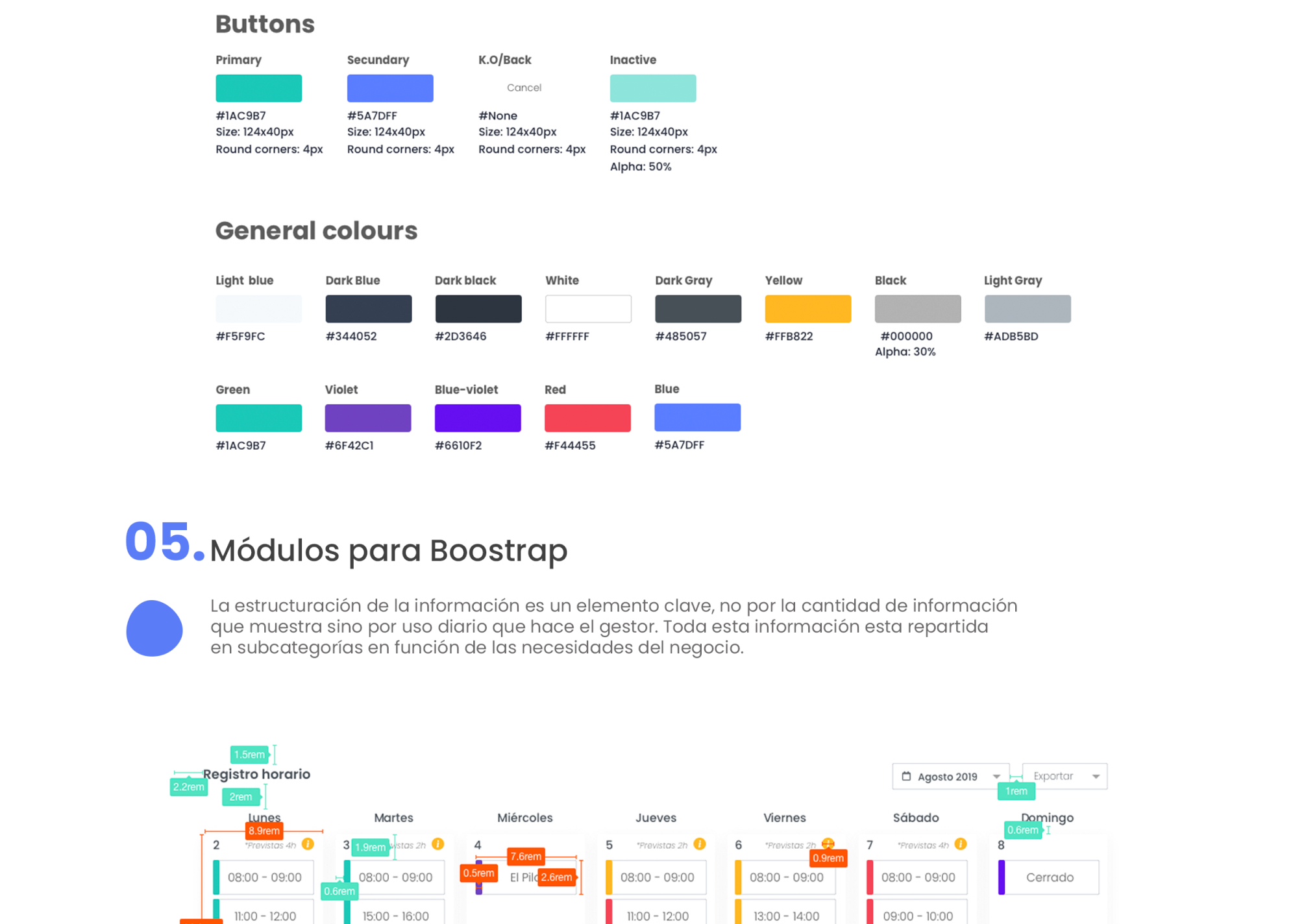
A consistent design system was also created to ensure clarity, scalability, and speed of interaction across the entire product experience.

Results + Learnings

๐ŸŽ›๏ธ Centralized customer management
โ†’ Access all customer information from a single place, avoiding data fragmentation.

๐Ÿ“‚ Complete customer profile
โ†’ Easily view personal data, bookings, communications, payments, and outstanding balances.

๐Ÿงพ Integrated digital contracts
โ†’ Sign and store contracts digitally within the app, simplifying document management.

๐Ÿ’ฌ Unified inbox and communication
โ†’ View and manage all customer interactions without leaving the platform.

๐Ÿ’ณ Payments and billing control
โ†’ Monitor completed and pending payments, improving financial tracking.

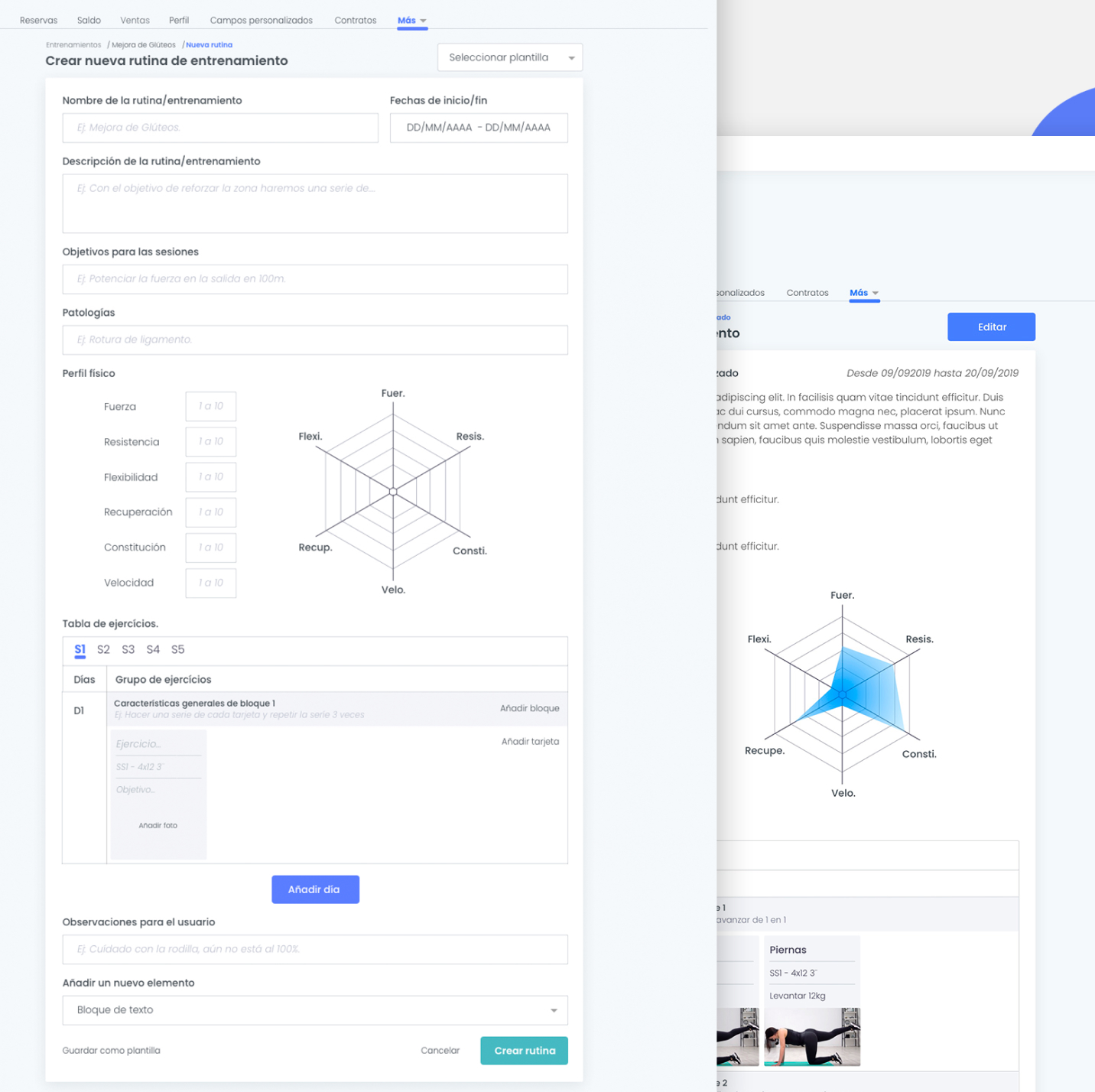
๐Ÿ“Š Customer activity monitoring
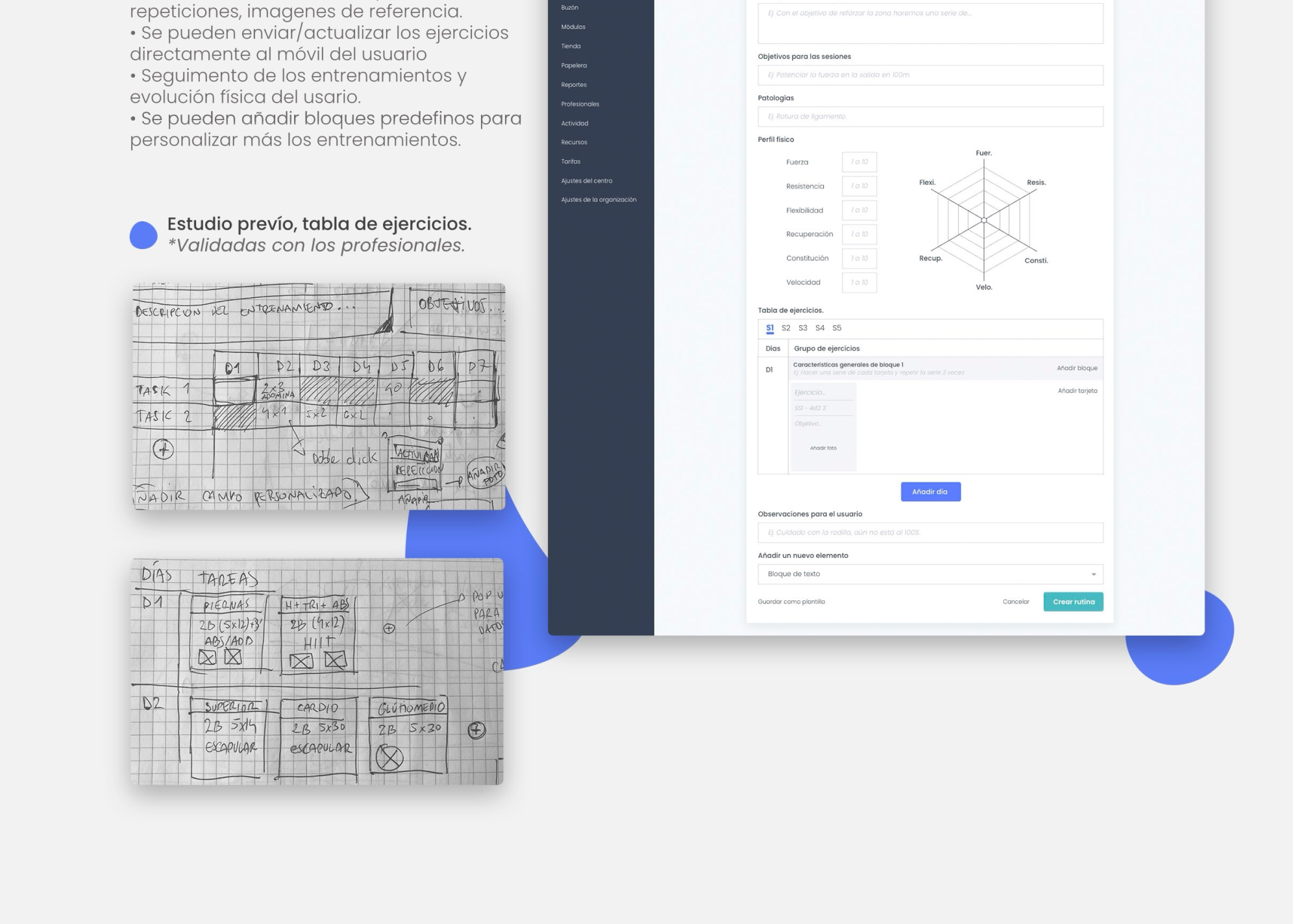
โ†’ Access key information such as training sessions, medical histories, and progress evolution.

๐Ÿท๏ธ Tagging and segmentation system
โ†’ Organize customers using custom tags for better classification and more precise actions.

๐Ÿงญ CRM funnel management
โ†’ Analyze and optimize the customer journey through structured funnels and sales processes.

โšก Time and process optimization
โ†’ Reduce manual tasks by keeping all information connected and automated.

๐Ÿ“ˆ Improved decision-making
โ†’ Gain a global, clear, and up-to-date view of the customer to act more strategically.